
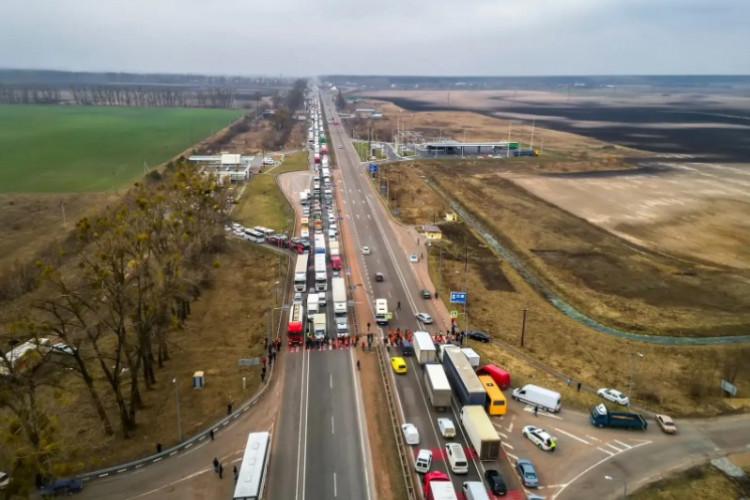
The planned rise in truck tolls is putting Austria’s transport industry on the back foot once again. At the end of November, the sector will stage another protest drive, urging an immediate halt to new burdens and the introduction of practical relief measures.
The 7.7% increase in distance-based tolls remains a significant strain for many Austrian haulage companies.
According to a press release from the Freight Transport Association, the additional costs cannot simply be passed on at a time of high inflation. A quick survey found that more than 90% of businesses expect major economic disadvantages.
“The mood is bad, and the economic situation is tense. We must do everything we can to safeguard our competitiveness,” said association chairman Markus Fischer.
The association is therefore calling for an immediate freeze on new burdens and rapid compensation measures.
Protest drive on 26 November To increase pressure, the industry has registered another protest drive for 26 November. Back in September, the Austrian Economic Chamber (WKÖ) warned that the toll increase, even after reductions: still represents “an enormous burden”, making further action unavoidable.
Austria is already among the countries with the highest truck tolls in Europe, a locational disadvantage that is being further exacerbated by rising international competition.
Calls for nighttime 80 km/h, C17 lorries and other measures A key issue for the transport industry remains the question of nighttime speed limits. Fischer explained:
“There are already some routes where driving at 80 km/h is permitted, marked by additional signs. We are calling for this regulation to be introduced nationwide.”
From the association’s perspective, a uniform nighttime 80 km/h limit would allow more efficient operations while also reducing noise.
The press release also outlines several further proposals that the association says could be introduced without additional budgetary impact:
- Introduction of C17 lorries: Allowing young people to gain practical driving experience from the age of 17 — after completing full training. The Austrian Economic Chamber points to the “successful L17 model” in the car sector.
- Adding professional drivers to the shortage occupation list to secure the supply of skilled workers.
- Approval of 5-axle, 40-tonne lorries.
- Cost-neutral adjustments to vehicle dimensions and weights to increase operational efficiency.
“We need a package to safeguard Austria as a business location — and we need it now,” Fischer said.


